UX & Design Leadership
I plan the work of the design team, guide design decisions, and review the quality of their work before handoff.
About
UX & DesignOps Lead with 19+ years of experience.
I design digital experiences and lead the design systems behind them, for government and enterprise platforms in Riyadh.
My experience also extends to front-end development with HTML, CSS, SCSS, and JavaScript, so what I design reaches users the way it was intended.
Professional overview
I started my career in 2007 in design, as a junior web designer, and until 2012 my focus was entirely on design and user experience.
After that I began writing code and building interfaces myself.
From designing interfaces for government and university clients, I moved into interface development at the National Housing Company, and then into leading UX today.
At every stage I have worked on both sides of the handoff: design and implementation.
Today I lead UX for an enterprise government platform of 14 systems, and a separate field app for mobile and web that brings selected services from those systems together.
I lead a multidisciplinary design team, set the standards external vendor teams design to, and own the design system that keeps all of that work consistent.
What I care about is decisions that survive delivery.
A design is only finished when it ships the way it was intended, so I put as much effort into tokens, documentation, reviews, and code as into the screens themselves.
What I do
This is what the titles mean in my day-to-day work, not in a job description.
I plan the work of the design team, guide design decisions, and review the quality of their work before handoff.
I standardize workflows, design reviews, and handoffs across 14 projects.
When squads rotate, they can pick up the work using the same process and standards.
I standardize shared components in Figma and align them with reusable HTML and SCSS implementations, so designers and developers can use the same components across projects.
My scope runs across teams through the shared decisions I lead and follow through to implementation: component standards, review gates, and handoff rules every squad works to.
Leadership
Two kinds of leadership, kept distinct: a multidisciplinary design team I lead directly, and vendor teams whose design work I direct and review, with design reviews, design QA, and shared component standards for everyone.
I lead the internal design team across the platform's systems and its mobile and web apps: setting design direction, coordinating work, running design reviews and design QA before developer handoff, and holding UX/UI standards and design system use.
I give design direction and feedback to designers at external vendor companies, review their deliverables for design system compliance, and align their work with the internal team's standards.
I work with business analysts, developers, and QA on scope and handoff, and review the implementation with internal and vendor developers before release.
Core expertise
Setting design direction, running design reviews, and turning complex requirements into clear product decisions.
Token architecture in Figma variables, component APIs with variants and states, and documentation that designers and developers both use.
Versioned releases, contribution and review workflows, breaking-change and exception policies, and release notes.
Dense, data-heavy workflows: complex forms, data tables, heuristic evaluation, and information architecture.
End-to-end product UX for a web platform and its field mobile app, from information architecture to prototypes and release.
Arabic-first interfaces, bilingual documentation, and WCAG 2.1 principles built into component specs.
Selected impact
Built across Figma components and tokens, a Bootstrap-based HTML/SCSS library, and a 38-page bilingual documentation site with a 4,371-icon library.
I am the named owner, with final approval on changes and releases.
Tokens for color, typography, spacing, radius, and component states, with every component documented on one template: anatomy, states, Figma properties against the code API, and accessibility.
Semantic versioning, a contribution review that needs one designer and one engineer approval, a breaking-change policy with migration guidance, and a partner handover workflow so external teams build on approved components instead of local copies.
I rebuild components in SCSS to match the Figma spec, retire duplicates without breaking screens already in production, and review implementation before release.
From design to delivery
I am a designer first: what I offer first is my experience in UX design and design systems.
Alongside it, I write front-end code myself, so designs reach real interfaces without losing anything on the way, and I review other teams' implementations against the spec.
I do not present myself as a full-stack developer.
Page and component markup built on proper headings, labels, and landmarks, with ARIA only where native elements are not enough.
Grids and layouts that hold from wide data tables on desktop down to mobile screens.
A layered SCSS library (helpers, components, shared styles, and pages) compiled into one stylesheet, with 30+ component partials.
Component interactions such as dialogs, image sliders, steppers, and file uploaders, written in JavaScript.
Bootstrap as the layout and utility base, with the design system's own component classes on top.
236 SCSS variables for color, typography, spacing, radius, and shadows, matching the tokens in Figma.
Arabic-first layouts with accessibility notes in every component spec.
Reviewing internal and vendor implementations against the Figma spec, and documenting each component's Figma properties against its code API.
Where this shows up: the design system for an enterprise government platform, whose SCSS library I have written and maintained hands-on since 2023; UI kits and production pages at the National Housing Company (HTML, CSS, JavaScript, Vue.js); and university portals at Majmaah and Jazan.
Career timeline
Every role since 2007, with official titles and dates.
Some periods overlap where freelance or contract work ran alongside another role.
UX Design Lead
Career progression: UI/UX Designer (Jan 2023) → UX Design Lead (Jul 2025)
Scope: Joined as a UI/UX Designer on a large-scale enterprise platform and its companion mobile app, building the core components of the design system with business analysts, developers, and QA.
Promoted in July 2025 to UX Design Lead.
I now lead the internal design team, give design direction to external vendor teams, and own the design system and its governance across web and mobile products.
Interface Development Specialist
Scope: UX/UI design and front-end development in the BS – Technology department.
I designed national housing web platforms and built them myself, from wireframes and prototypes to responsive production pages in HTML, CSS, JavaScript, and Vue.js, and created UI kits and reusable front-end components shared with engineering and QA.
UI/UX Designer
Scope: Led UX and UI work on a five-month redesign of the Human Rights Commission's public platform.
Accountable for layout redesign, experience improvement, and prototyping — from early sketches through high-fidelity deliverables.
Web Designer
Scope: Contracted through an external company.
Designed and built the front end (HTML, CSS, JavaScript) of university portals and web applications, including the University Web Portal, Electronic Services Portal, Recruitment Portal, and University Housing Portal.
Worked directly with deans and IT leadership on new services and improvements.
Web Designer
Scope: Interface designer delivering digital solutions for government agencies and educational institutions — including the National Guard, Shaqra University, and the Saudi Food and Drug Authority.
Worked within a collaborative design team across front-end implementation using HTML and CSS.
Web Designer
Scope: UX/UI designer and front-end developer for the university e-portal unit.
Gathered student and staff requirements, collaborated with analysts, developers, and QA to ensure delivery met specifications, and engaged stakeholders on product enhancements and new feature requests.
Junior Web Designer → Web Designer
Scope: Web and interface design, focused entirely on design and user experience — the foundation for the UI/UX, front-end, and design system work that followed.
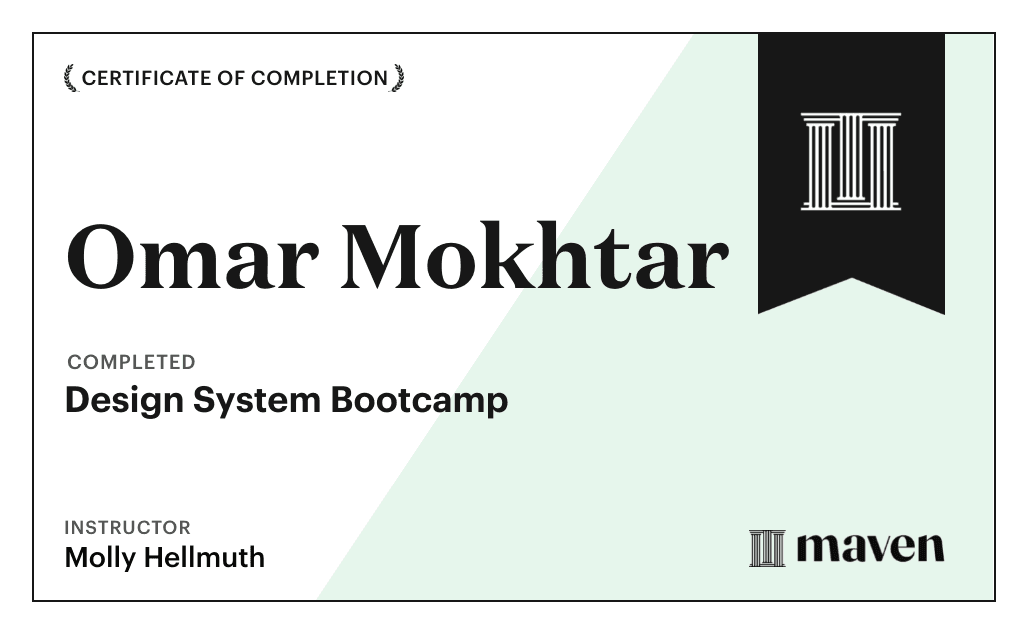
Credentials